How to Plan a Stress-Free Christmas: A Week-by-Week Checklist
Week-by-Week Christmas Checklist (Free Gift Planner Included)
The short answer: start planning Christmas about eight weeks before December 25. Keep three lists — Money, People and Calendar — and give each week one main goal. That way you’ll always know what you can spend, who still needs a gift and which deadline is coming next, long before anything turns into a last-minute emergency.
If Christmas already feels like fifty unfinished thoughts competing for your attention, you don’t need a more complicated system. You need one place for the decisions you’ve already made, and a rough idea of what to do this week.
I have one rule: if a task exists only in my head, it doesn’t exist. December is a terrible month to trust a brain that’s also trying to remember where it hid the presents. So everything below comes back to writing things down in three simple lists, then working through them a little at a time from late October to Christmas Day. If you’re starting in December, you can skip straight to the 2-week catch-up plan.
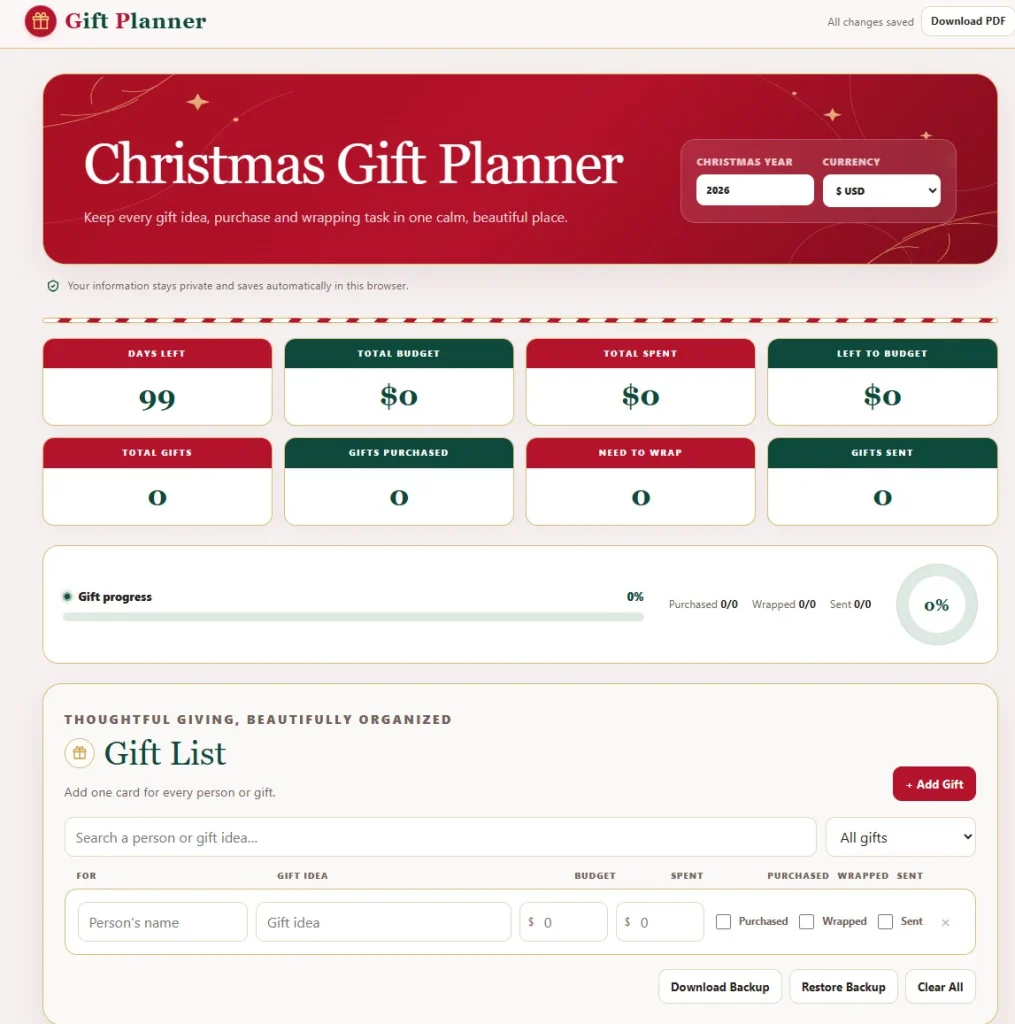
🎁 Want to start with gifts? My free Christmas Gift Planner keeps gift ideas, budgets and purchased, wrapped and sent statuses in one place. It opens in your browser, no app or account needed.
Table of Contents
Christmas planning checklist at a glance
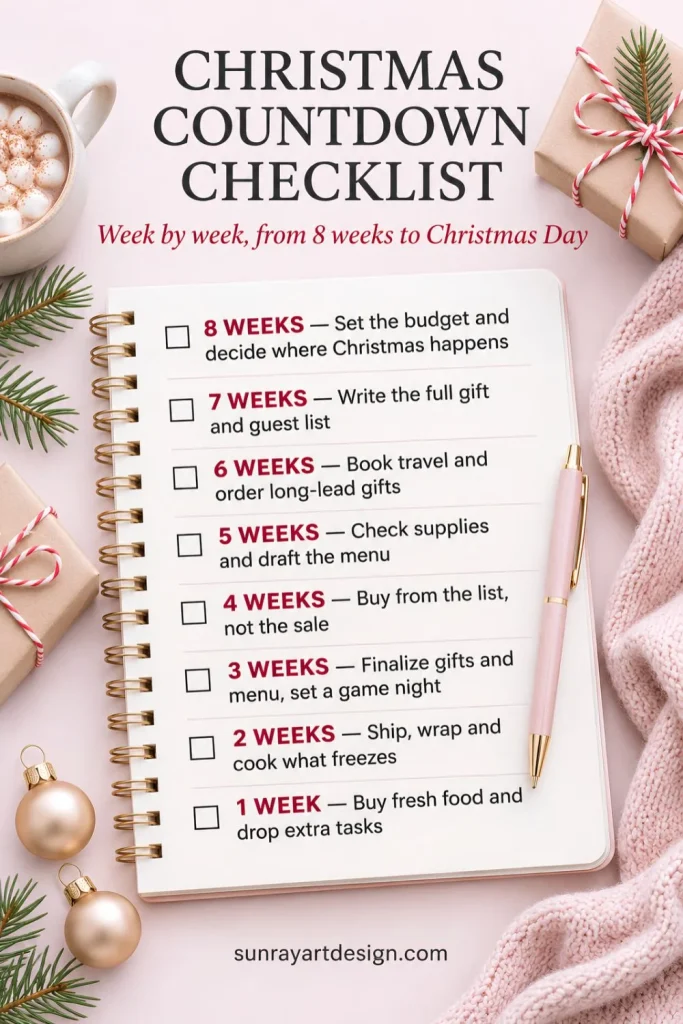
Here’s the main goal for each week. Shopping, travel and cooking will take extra time on top of this.
| When | Main goal |
|---|---|
| 8 weeks before | Set the budget and decide where Christmas will happen |
| 7 weeks before | Write the complete gift and guest list |
| 6 weeks before | Book travel and order anything that takes a while to arrive |
| 5 weeks before | Check what you already have and draft the menu |
| 4 weeks before | Buy from the list, not from the sale |
| 3 weeks before | Finalize gifts, cards and menu; set a family game night |
| 2 weeks before | Ship, wrap and cook anything that freezes |
| 1 week before | Buy fresh food and drop nonessential tasks |
Once a week, sit down for fifteen minutes with your lists. Add what you spent, update your gifts and give every unfinished job an actual date. I call it my Sunday reset, though any quiet weekday with coffee works.
Before you start: the three lists that run Christmas
You can keep these in a notebook, a spreadsheet or a planner. The best choice is simply the one you’ll still open when December gets busy.
Money: your Christmas budget
Start with one total you can spend without making January miserable, then split it into a few categories: gifts, food and drinks, decorations, cards and postage, travel and events, and a small category for extras like wrapping paper, tape and batteries. Give each category two numbers, what you plan to spend and what you actually spend. A single total only tells you the money is gone. Categories tell you where it went, and they warn you early, while you can still do something about it.
People: gifts, guests and cards
This list is bigger than your gift list. Write down everyone connected to your Christmas plans: the people you’re buying for, with a spending limit and a gift idea next to each name, but also guests, their dietary needs and what they’ve offered to bring, plus anyone who gets a card. As gifts come in, note where you’ve put them. “Purchased” doesn’t help much if nobody remembers which closet it’s in.
Calendar: dates and deadlines
Add every date you already know: school and work events, family gatherings, travel days, the evenings you’re hosting, local order and pickup deadlines, and the holiday shipping deadlines for the carrier you use. Then do the part most people skip and schedule the work itself. “Wrap gifts on December 18” is a plan. “Wrap gifts sometime” is how you end up on the floor at midnight with tape stuck to your sleeve.
Your week-by-week Christmas countdown
Work backwards from December 25. If you’re starting later, begin with the current week and pull in only the most important tasks you missed.
8 weeks before Christmas: decide before you buy
- ☐ Set your total budget and split it into categories.
- ☐ Decide where you’ll be on Christmas Eve and Christmas Day, and who’s hosting.
- ☐ Put every event you already know into one calendar.
- ☐ Ask the family for wish lists.
Set the total before the first holiday sale sets it for you.
7 weeks before Christmas: complete the people list
- ☐ Write down every gift recipient with a spending limit and a gift idea.
- ☐ Update your card list and addresses.
- ☐ Confirm the likely guest list and ask about dietary needs.
- ☐ Agree on family gift rules, like Secret Santa, kids only or a spending cap.
Once teachers, neighbors and hosts show up, the list is usually longer than you expected, so check the total against your budget before you shop.
6 weeks before Christmas: handle anything that takes time
- ☐ Book travel, accommodation, pet care or tickets.
- ☐ Order personalized, handmade or international gifts and photo cards.
- ☐ Check holiday shipping deadlines for every destination.
- ☐ Send invitations if you’re hosting.
Start with whatever would be hardest to replace if it arrived late. Socks can wait. A personalized book from a small maker probably can’t.
5 weeks before Christmas: check the house and draft the menu
- ☐ Test the lights and check decorations before buying more.
- ☐ Count wrapping paper, tape, tags and gift bags.
- ☐ Draft the Christmas Eve and Christmas Day menus.
- ☐ Reserve special food or bakery orders.
4 weeks before Christmas: buy from the list
- ☐ Buy the gifts that are already on your list.
- ☐ Write down the actual cost the same day.
- ☐ Check delivery dates instead of assuming “in stock” means “before Christmas.”
- ☐ Write your cards in one or two short sessions.
A 40% discount on something nobody wanted is still 60% wasted.
3 weeks before Christmas: close the open decisions
- ☐ Decide on a gift for every person.
- ☐ Finalize the menu and the number of guests.
- ☐ Mail cards and any gifts that need to travel far.
- ☐ Pick a date for a family game night or another quiet evening together.
2 weeks before Christmas: ship, wrap and prepare
- ☐ Ship the remaining gifts after checking delivery estimates.
- ☐ Wrap gifts as they arrive.
- ☐ Buy pantry groceries and cook anything that freezes well.
- ☐ Print gift certificates, coupons and games.
1 week before Christmas: protect the essentials
- ☐ Buy fresh groceries as close to the day as you can.
- ☐ Write a cooking timeline, working backwards from serving time.
- ☐ Confirm travel, arrival and pickup times.
- ☐ Look at every unfinished task and choose: do it, delegate it or delete it.
Christmas Eve and Christmas Day
- ☐ Prepare make-ahead dishes and set the table on Christmas Eve.
- ☐ Put the gifts out, then stop planning at a time you chose in advance.
- ☐ On the day, follow your cooking timeline instead of your memory.
- ☐ Ask for help before you urgently need it, and enjoy the people you made the plan for.
Save this checklist or pin it, so it’s ready next year too.
How to handle the parts that usually cause stress
The checklist tells you when. These are the parts where people most often get stuck on how.
Keep the budget alive after week one
A Christmas budget only works if you keep looking at it. Most people write one in October and never open it again, then wonder in January where the money went. During your weekly reset, add everything you’ve bought since the last check and compare it with your plan, category by category. If one category runs over, move money from another one on purpose, rather than quietly hoping it evens out. And be honest about the small stuff. Tape, batteries, extra postage and the coffee you bought on a long shopping trip don’t look important on their own, but together they’re often the reason a careful budget slips.
Give every gift a clear status
A single “done” checkbox hides too much. A purchased gift may still be sitting in a warehouse, and a delivered one may be lying unwrapped by the front door. What really helps is knowing where each gift is right now: still an idea, purchased, wrapped, or sent and ready under the tree. When you can see that at a glance, nothing gets forgotten in a drawer until December 26.
My free Christmas Gift Planner is built around exactly these steps. It keeps your gift list, budget per person, purchased, wrapped and sent statuses and your own wish list together in your browser. Sign up with your email and I’ll send it to your inbox.
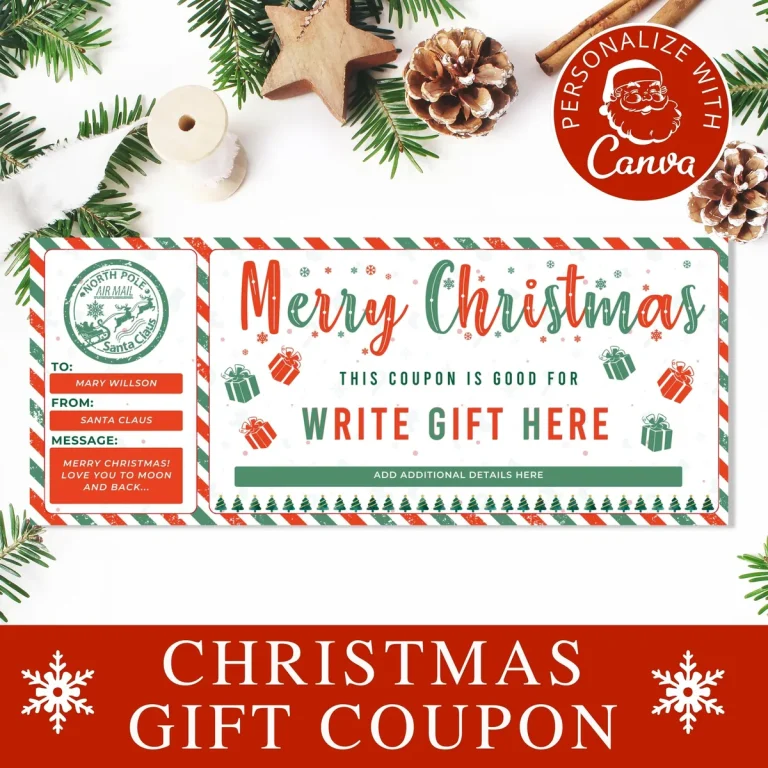
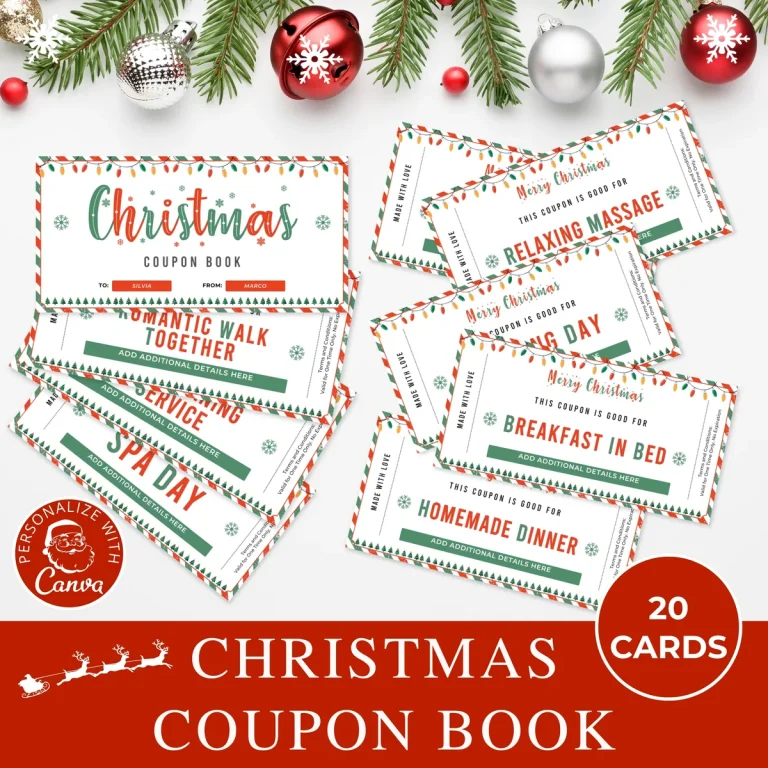
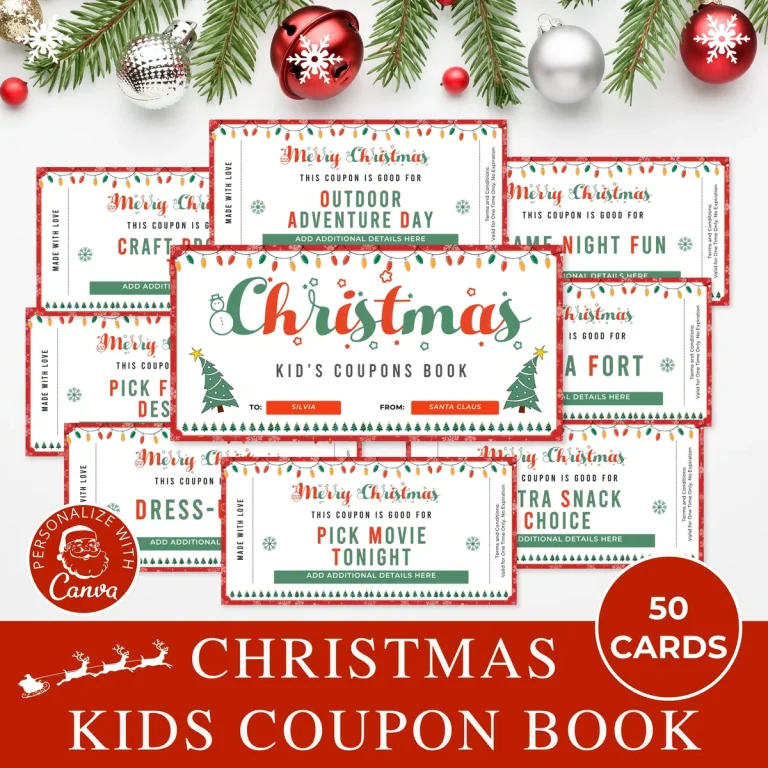
Some of the best gifts on any list aren’t things at all. For the person who already has everything, choose an experience first, like concert tickets, a cooking class or a spa day, and then think about how to present it. A printable gift certificate gives it something to unwrap, and because you can make it the evening before, it’s also one of the calmest last-minute gifts there is. Coupon books work the same way for smaller promises, for a partner or for the kids.
Printable gift ideas
Plan Christmas dinner backwards
Don’t start with a pile of recipes. Start with the time you want to eat, write it at the bottom of a page, and work upwards. Each dish gets its cooking time, plus any time it needs to rest or cool, and you’ll quickly see which dishes are fighting over the same oven. Anything that can be made ahead moves to an earlier day, and every dish you’re not cooking yourself gets a name next to it. Keep your food shopping on its own list, separate from gifts and household things, and in the last week split it into pantry, frozen and fresh, so the most perishable food is bought last.
Plan a family Christmas game night
Leave at least one evening that isn’t about preparation. If every free hour becomes another prep slot, the plan has eaten the holiday. A game night is one of the easiest ways to protect that evening, because it needs very little setup and works for every age at the table.
Put the date in the calendar around three weeks before Christmas, before the evenings fill up. Pick two or three games, print them a few days ahead, and keep pencils, answer keys and a few small prizes in one box, so setting up takes five minutes. Candy canes make easy prizes.
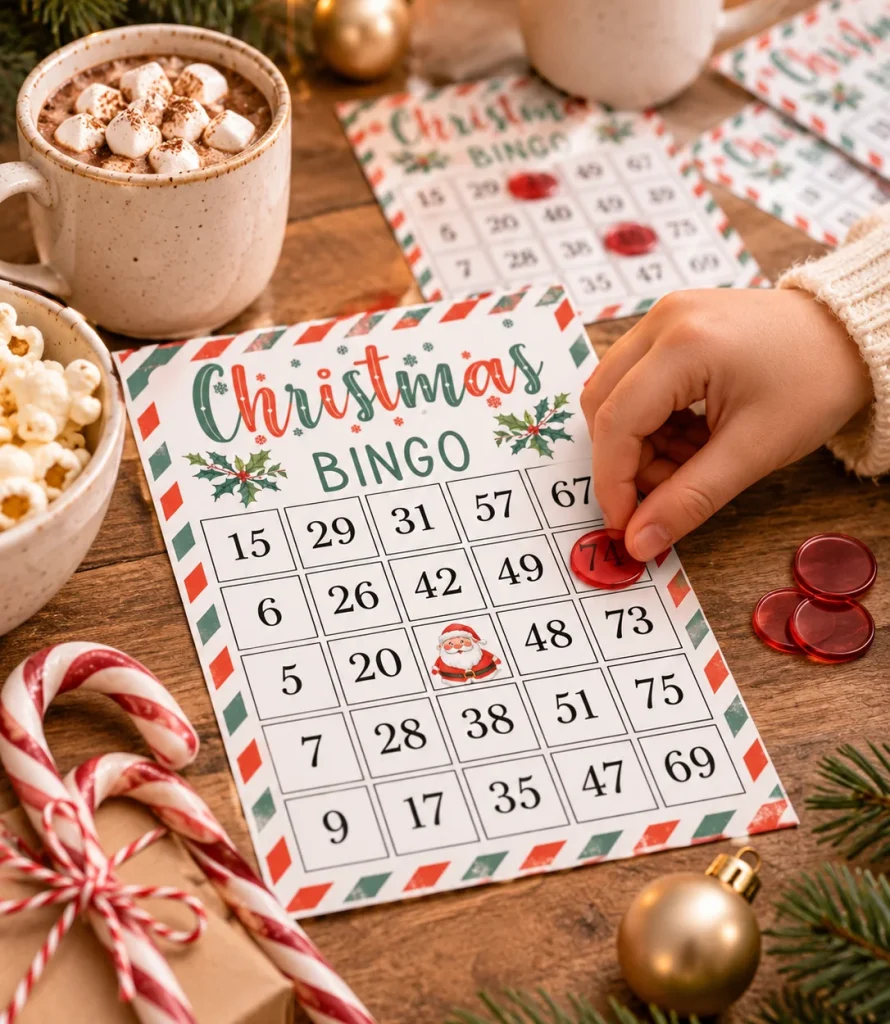
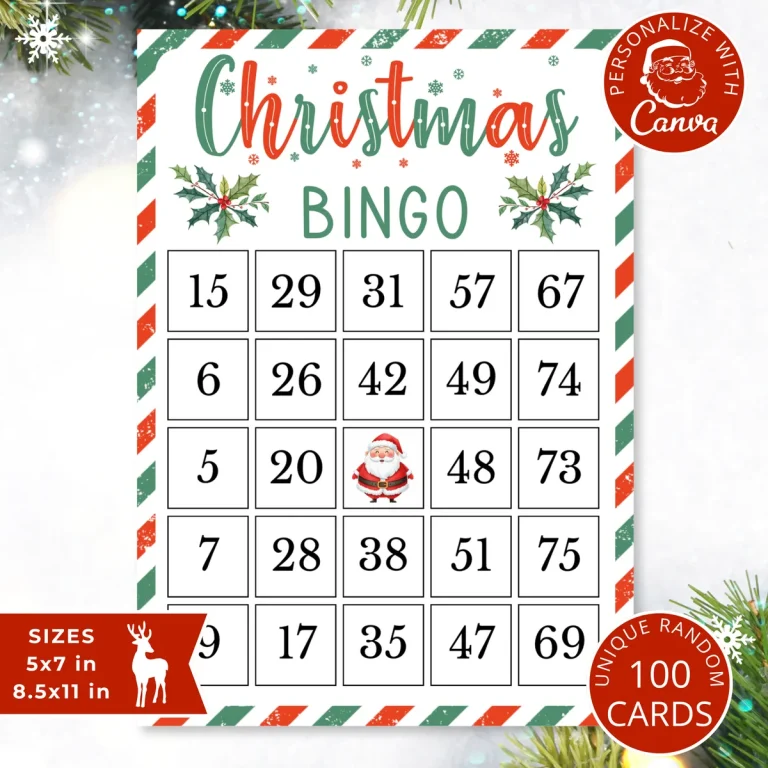
My test for a Christmas game is simple: can I explain it before someone wanders off to refill a drink? Bingo passes easily, and so does a survey game where everyone guesses the most popular answers. Which one to pick depends on your crowd:
Choose your Christmas game
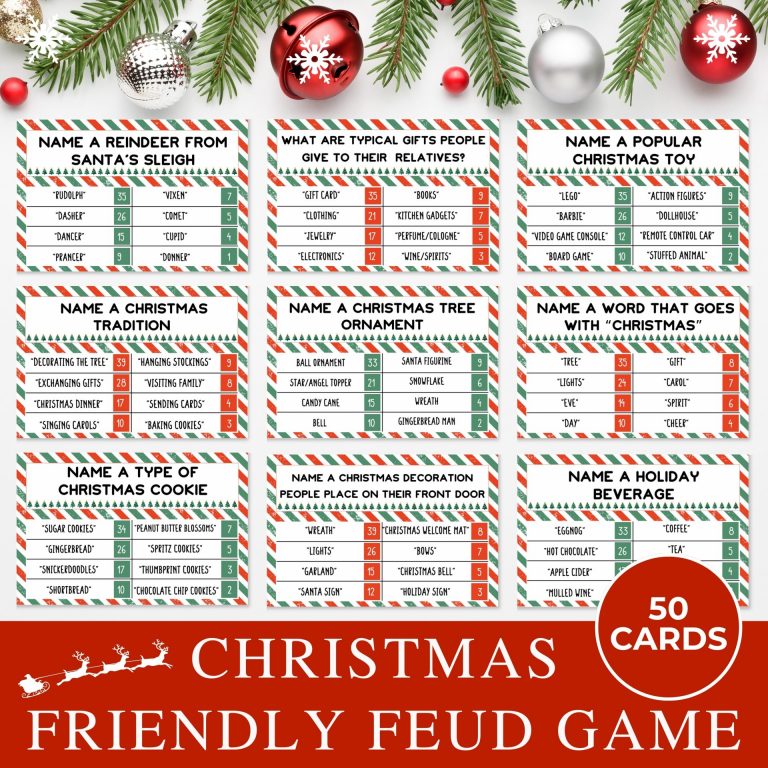
50 survey question cards with strike cards. Best for two teams of teens and adults.
Starting late? Use this 2-week Christmas plan
If Christmas is fourteen days away, forget the eight-week plan. You can still have a calm December. You just need to deal with outside deadlines first: delivery, travel, food orders and promises made to other people.
Spend today on the three lists. Set a total budget, write down every person you’re buying for, add the events and shipping deadlines you already know, and decide where Christmas Day will happen and who’s in charge of the meal. It takes less than an hour, and everything after it gets easier.
Over the next three days, buy anything that still has a reliable delivery date, and for everything else choose local pickup, a digital gift or an experience. This is exactly where a printable gift certificate earns its place: you can make it the evening before and nobody will know it was last minute. After that, turn to food. Confirm how many people are coming, choose dishes you’ve made before, and ask guests to bring something specific instead of “anything you like.”
In the second week, wrap each gift as it arrives, send digital cards if paper ones won’t arrive in time, and decorate with what you already own. Save the last three days for fresh groceries and cooking, and stop adding new tasks. Sleep belongs on the plan too. Nobody gives out medals for wrapping presents at 3 a.m.
When a notebook stops being enough
Paper works well until you find yourself copying the same purchase into the gift list, the budget and the to-do list. That’s usually the moment a digital planner starts saving you time.
My Interactive Christmas Planner keeps the whole season in one place: your tasks and due dates, a planned-versus-actual budget, gifts and their statuses, cards and decorations, menus with guests, groceries and recipes, and a calendar for events, traditions and travel. The sections talk to each other, so when you mark a gift as purchased and enter the price, your budget and dashboard update on their own, and a countdown shows how much is done.
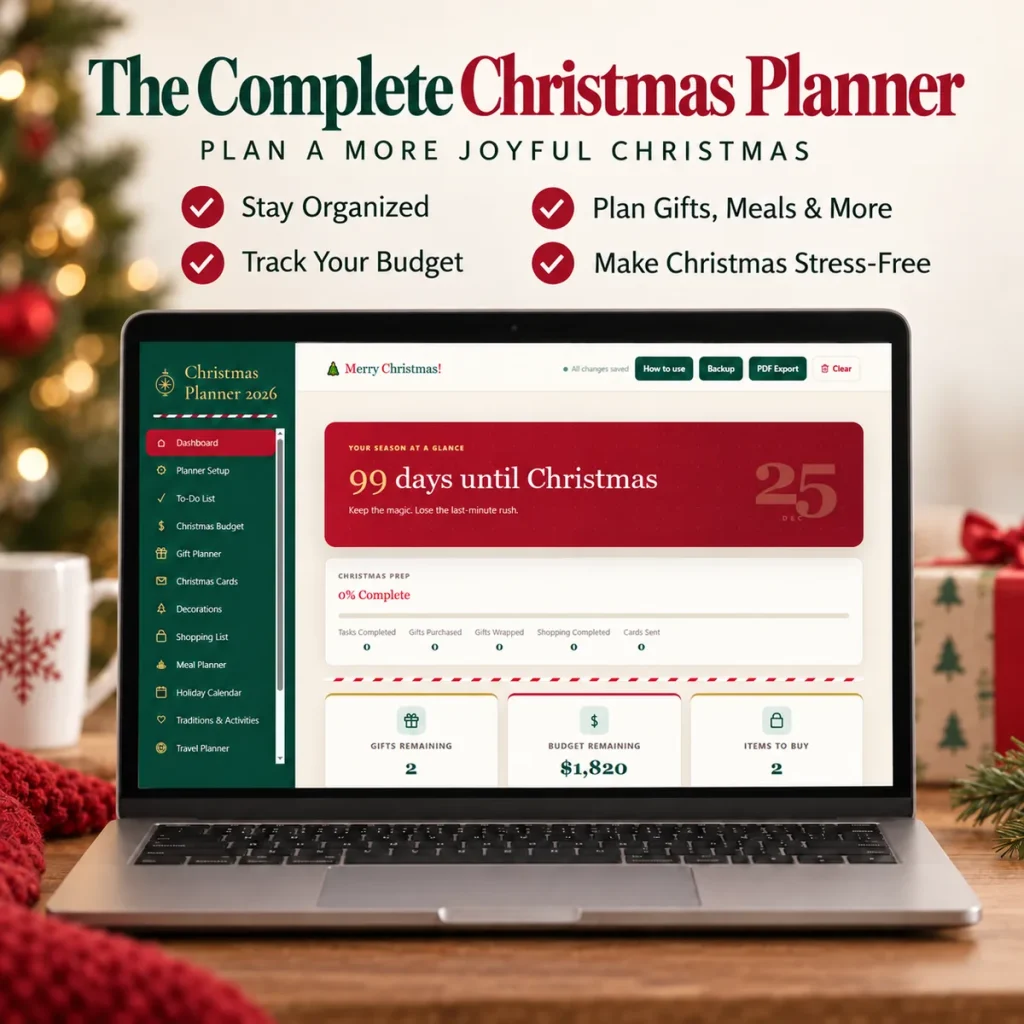
It’s an HTML file that opens in your web browser on a computer or phone, even offline. You don’t need Excel, Google Sheets, Canva, an account or a subscription. Your data saves in that browser, and you can download a backup to keep it safe or move it to another device, or export sections as a PDF.
🎄 Plan the whole season in one place: see the Interactive Christmas Planner
Prefer to see it in action first? This 8-minute walkthrough shows the setup, the lists and the dashboard.
After Christmas: make next year easier in 15 minutes
The best time to make next Christmas easier is the week after this one, while you still remember what went wrong. Before you put your lists away, make yourself a cup of tea and look back at the season. Which budget category went over, and by how much? Which gifts were a hit, and did anyone mention something they’d love next year? Which task did you leave too late, and which tradition was worth the effort while another one quietly wasn’t? Note what ran out or got bought twice, too.
Then keep the gift list, the card addresses and your actual spending. Next October, you won’t be starting from a blank page, but from this year’s real numbers.
Frequently Asked Questions
When should I start planning for Christmas?
About eight weeks before December 25 is a comfortable start. Begin with the budget, the gift list and fixed dates. If you start later, prioritize anything with a delivery, travel or food-order deadline and use the 2-week plan above.
What should be on a Christmas planning checklist?
A budget with planned and actual spending, gifts with individual limits and statuses, cards, decorations, events, travel, the guest list, the menu, a grocery list and, if you’re hosting, a Christmas Day cooking timeline.
How can I make Christmas less stressful?
Keep money, people and dates in one place. Give every unfinished task a date, review your plan once a week and drop the tasks that don’t make the celebration better. Protect time for rest and family as carefully as you protect shipping deadlines.
How do I stop overspending at Christmas?
Choose a total before you shop, give each person and each category a limit, and write down the actual amount on the day you buy. During your weekly review, move money between categories instead of treating every overage as extra money.
What games can we play at a family Christmas party?
Choose games that everyone can join in a minute. Christmas bingo works for all ages and large groups, and a team game like a Christmas Friendly Feud is great for teens and adults who enjoy a bit of competition. Two or three short games are plenty for one evening.
What is a good last-minute Christmas gift?
An experience, a digital gift or something available locally, so you don’t depend on shipping. A printable gift certificate gives an experience something to unwrap, and a coupon book works well for small shared activities.
Do I need Excel or Google Sheets to use the Interactive Christmas Planner?
No. It’s an HTML file that opens in your web browser on a computer or phone. You don’t need Excel, Google Sheets, Canva, an account or a subscription.
Start with the list that’s bothering you
Open the list that keeps circling in your head. If it’s gifts, write the names. If it’s money, write the total. If it’s the calendar, add the dates you already know. Ten minutes is enough for today. Christmas will still be coming tomorrow, but at least it’ll be written down.
🎁 Start with the free Christmas Gift Planner, or plan the whole season with the Interactive Christmas Planner.
Popular right now
Recent reviews
-
 Custom Order Form Template for Small Business
Rated 5 out of 5by Jennifer
-
 Invoice Template, Blush Watercolor Editable Canva
Rated 5 out of 5by Evette Moreno
-
Custom Order Form Template for Small Business
Rated 5 out of 5by Rachelle
-
 Tumbler Order Form Template for Custom Cup Orders
Rated 5 out of 5by Justice Edwards
-
Custom Order Form Template for Small Business
Rated 5 out of 5by Emily Gleed-Owen